Visualizzazione post con etichetta columbia. Mostra tutti i post

mercoledì 14 agosto 2013

Inacquistabile! Devil’s Anvil, bouzouki e la guerra dei sei giorni


Dio benedica gli anni ’60!
Vi ricordate? Quelli dell’amore universale; in cui le persone scendevano in strada dandosi la mano, e dandosi quella mano formavano grandi girotondi vorticosi con cui proclamavano la pace nel mondo e l’inizio di una nuova era di fraternità e propizie congiunture cosmiche.
Quelli del solo-unico-vero-rock-che-conta. Morrison, Hendrix, Lennon…
Bè, magari poi le cose non stanno proprio così…
Però all’epoca ti poteva pure capitare di trovare un bellimbusto arabo, con baffoni e scarpe a punta da sultano, fronteggiare una complessino beat nel giro del Village.
E il bello dei bassifondi del rock è che ti riservano sempre qualche sorpresa, qualche colpo di coda che ti costringe a rivedere continuamente la tua personale classifica di bizzarrie musicali. Pensi di averle sperimentate tutte con qualche Big Boy Pete, con i Randy Holden, con il prog giapponese, con la JPT Scare Band.
Poi spuntano fuori questi Devil’s Anvil.
Fioriti tra quei girotondi di pacificazione cosmica, vagabondavano per le stesse coffe house di Dave Van Ronk con nomi che oggi sarebbero sulla lista nera di qualsiasi controspionaggio: Kareem Issaq, Mike Mohel, Eliezer Adoram. Strumenti che sanno di deserto, bouzouki, oud, tamboura, timbri salmastri di Mediterraneo, costa meridionale: un happening scalzo alla prima moschea a destra.
Ma pur immerso fino al collo nello stordimento di quegli anni alla marijuana. Se fossero fioriti sulla costa ovest avrebbero strappato ai Caleidoscope lo scettro di Contaminatori Definitivi.
Ma a New York fecero la conoscenza di tale Felix Pappalardi, uno sdolcinato produttore/bassista che smerciava sogni colorati a tutto volume per le masse indistinte che avrebbero presto osannato Cream e addirittura Mountain. Ma era pure un personaggio con gli agganci giusti, tanto da riuscire ad accasare quell’accozzaglia di oriundi medio orientali con la Columbia.
Dio benedica gli anni ’60!
Così anche i nostri prodi clandestini mettono assieme 11 pezzi per un lp: Hard Rock From The Middle East. Piuttosto chiaro, no?
Roba da fare andare di traverso fior di biscottini al mitico George W. Bush. Ma ve lo immaginate l’americano medio a comperare un lp con in copertina un truce volto scuro avvolto in un turbante candido con tanto di deshdasheh a righe alla Ahmad al-Shuqayri?
Inacquistabile!
Quei pochi che lo acquistarono saranno forse rimasti interdetti. O forse no, tanto all’epoca qualunque orientaleggiamento di maniera era fin troppo ben accetto. Pappalardi, ahimè, riduce la carica arabica del gruppo ad un sound indecisissimo tra bordoni psichedelici e pruriti garage, tra unplugged folk da menestrelli della Grande Depressione, canzonette da juke-box, ed abbozzati tentativi di world music che più imperialista non si può.
Neocolonialismo rock, ma dagli Amerikani ci si poteva aspettare qualcosa di meglio? Electric Prunes del Sahara.
Per fortuna la totale follia di testi cantati in arabo, turco, greco e ovunque incomprensibili pur quando in inglese rende divertente tutto quanto il disco. Con l’aggiunta di un paio di pezzi di bello spessore e trance assicurata: Wala Dai, Besaha e Selim Alai  in particolare.
Ma la ciliegina sulla torta fu che nel giorno esatto in cui il disco comparve nei negozi, il conflitto israelo-palestinese deragliò nella Guerra dei 6 giorni. Era il giugno 1967.
Chi si sarebbe azzardato, per le strade di New York, a girare con sottobraccio un lp 30x30 dominato da un sinistro simil-kamikaze e la parola “diavolo” a caratteri cubitali nel titolo?
Inacquistabile…
Allora, ma forse anche adesso.

PS: non ne sono assolutamente sicuro… ma metà del ’67 credo ci siano ottime possibilità che questo sia il disco in cui per la prima volta compare esplicitamente l’espressione “Hard Rock”…

martedì 29 novembre 2011

Mr. Tambourine Man - Discography and Videography


DISCOGRAFIA SELEZIONATA DA: 


Mr. Tambourine Man - The Byrds


45’s
Mr. Tambourine Man/I Knew I'd Want You (Columbia 43271) 1965 (USA)
Mr. Tambourine Man/I Knew I'd Want You (CBS 201765) 1965 (UK)
Mr. Tambourine Man/I Knew I'd Want You (CBS 1922) 1965 (Italia)


I° U.S.A. Press
II° U.S.A. Press

33’s   
Mr. Tambourine Man (Columbia CS 9172) 1965 (USA)
Mr. Tambourine Man (CBS S BPG 62571) 1965 (UK)
Ristampato in CD: 1993 (Columbia - 9172), 1996 (Columbia/Legacy 64845), 2004 (Sony 483705)

CD
The Essential Byrds (Columbia/Legacy  89110) (Compilation 3CD)

domenica 27 novembre 2011

The Marshall In The House Of The Rising Sun - Byrds


The House Of The Rising Sun


All this was the prelude of what would have happened exactly one year after in Los Angeles January 1965, when a group of novice twentys, who called themselves the Byrds, entered in the studio to cut a traditional, "Mr.Tambourine Man”, which later appeared on Dylan’s "Bringing It All Back Home” (March 1965), of which the band had a demo for the hands. They had no arrangements or revolutions in the head, but an idea, and one of them even an electric guitar. The idea was to "plug the jack" in the Dylan’s acoustic version, adopted without hesitation and even halved in duration and slowed in rhythm. The guitar was a Rickenbacker 12-string property of Roger McGuinn, leader of the group: a sound so much instantly recognizable, to becoming the "trademark" of the band in the following years. Did the rest vocal harmonies (taken by the Beatles and the Everly Brothers) that will be a standard of the west-coast. Trump card: the production of Terry Melcher, able to follow the thread that binds folk to "jingle jangle" Surf guitar and Merseybeat’s easy melody. The result is Mr. Tambourine Man, one of the most fulminating debut single. That guitar reverb, dreamy adolescent voices, the sound clear and solar, were soaked with California Youth and breathability summer scenarios of innocent transgression on the beaches of the Pacific.

"Hey! Mr. Tambourine Man, play a song for me,
In the morning I'll come followin jingle jangle 'you.
Take me on a trip upon your magic swirlin 'ship,
My senses Have Been stripped, my hands can not feel to grip,
My toes too numb to step, wait only for my boot heels
To be Wanderin '.
I'm ready to go anywhere, I'm ready for to fade
Into my own parade, cast your dancing spell my way,
I promise to go under it. "

venerdì 18 novembre 2011

The House of the Rising Sun - Discography and Videography


DISCOGRAFIA SELEZIONATA DA:  

The House of the Rising Sun - The Animals


45’s
The House Of The Rising Sun/Talkin' Bout You  (Columbia DB 7301) 1964 (UK)
The House Of The Rising Sun/Talkin' Bout You  (MGM K 13264) 1964 (USA)
The House Of The Rising Sun/Talkin' Bout You  (Columbia SCMQ 1802) 1964 (Italia)


33’s   
The Animals (Columbia 33SX 1669) 1964 (UK)
The Animals (MGM E-264) 1964 (USA)
Ristampati in CD nel 1997 (CD - EMI)

CD
The Complete Animals (EMI 7946132) 1997 (Compilation 2CD)
The Best of the Animals (1997 EMI 6406) 1997 (Compilation)

giovedì 17 novembre 2011

The Marshall In The House Of The Rising Sun - The Animals


The House Of The Rising Sun


"House Of The Rising Sun", that old story of New Orleans’ joint and its world of misery and depravity, had always been a delicacy. Many had sung it, bending from time to time to their musical needs. Nina Simone ("At The Village Gate", 1962) had made it a nightly jazzy atmosphere, and listening to it, seems to see the spread of smoke in the room. Woody Guthrie did not betray the storytelling’s popular spirit: an all narrative cut, like a crime news in the fifth page. The old bluesman Josh White, from a first recording even in 1942, had built a twilight and dilated epic, like a Chandler’s page, using a vocal line suspended on long vowels and an arrangement with piano and trumpet of grim charm.

Is with this version in the head, says bassist Chas Chandler, that The Animals entered in the studio, in February of 1964, to record the song. The RnB band from Newcastle had already released an adaptation of a folk number, Baby, Let Me Take You Home (derived from "Baby, Let Me Follow You Down," already on Dylan's debut), but this time the things would have been different. Alan Price, keyboardist and musical leader, had set up a fighting and rampant arrangement, all played on the warm tone of his organ, the dark voice of Eric Burdon and the undeniable working –class style of all the combo. Difficult, however, to think that the group did not know the version just recorded by Dylan (again on his debut LP, in 1962), whose descending guitar line is full taken by Price’s keyboard.
The song is opened by a western arpeggio by Vestine, before being led, in the first two stanzas, by the crescendo controlled but dramatic of the singer, who comes to a climax with real pathos ("And the only time he's satisfied Is When He's on a drunk"); Price then, in the song’s barycentre, unleashes the best organ solo of the era: symmetrical, concise: perfect. The music start again, but the crescendo is repeated in the last two stanzas, in which even Vestine's guitar becomes more insistent to support the last declamation of a truly visceral Burdon. At the end it turned out a song of more than 4 minutes, an eternity for that era. So much that in EMI they were doubtful of a song they thought long and perhaps boring; incredibly Mickie Most, producer of the band and a true artist of the fade-outs at 2'30'', believed in the song that was well distributed both in England and America, albeit with some "cut".
"House of the Rising Sun" jumped on “top of the pop” on July 7, and remained there for a week before giving way to the Stones’new release. In America was again No. 1. It was undeniably a rock song, rampant, rhythmic, yet serious, even dramatic, steeped in realism, different from the standards of the era who sent fifteen into raptures. It was the first rock hit to take whole home from the popular heritage of the old white American, to which were devoted folk giants as Guthry or Pete Seeger, who had nothing to do with the '60s British charts, far more inspired by the blues. And of this Blues were disciples the Animals: twisting with their electric charge a piece of an old folk singer, had found success, but the song will remain unique in their catalog, much more generous with references to the black music.

All this was the prelude of what would have happened exactly one year after in Los Angeles January 1965, when a group of novice twentys, who called themselves the Byrds, entered in the studio to cut a traditional, "Mr.Tambourine Man”...               (to be continued...)


The House Of The Rising Sun

“House Of The Rising Sun”, quella vecchia storia del bordello di New Orleans e del suo mondo di miseria e depravazione, era sempre stata un boccone prelibato. L’avevano cantata in tanti, piegandola di volta in volta alle proprie esigenze musicali. Nina Simone (“At The Village Gate”, 1962) ne aveva fatto un jazz d’atmosfera notturna e, ad ascoltarla, sembra di vedere le volute di fumo spandersi nella sala. Woody Guthrie non aveva tradito lo spirito popolare del cantastorie: un’esecuzione tutta narrativa, da colonna di cronaca in quinta pagina. Il vecchio bluesman Josh White, a partire da una prima incisione addirittura nel 1942, ci aveva costruito dentro un’epica crepuscolare e dilatata come una pagina di Chandler, utilizzando una linea di canto sospesa su vocali lunghissime e un arrangiamento con pianoforte e tromba dal fascino sinistro. 

giovedì 9 giugno 2011

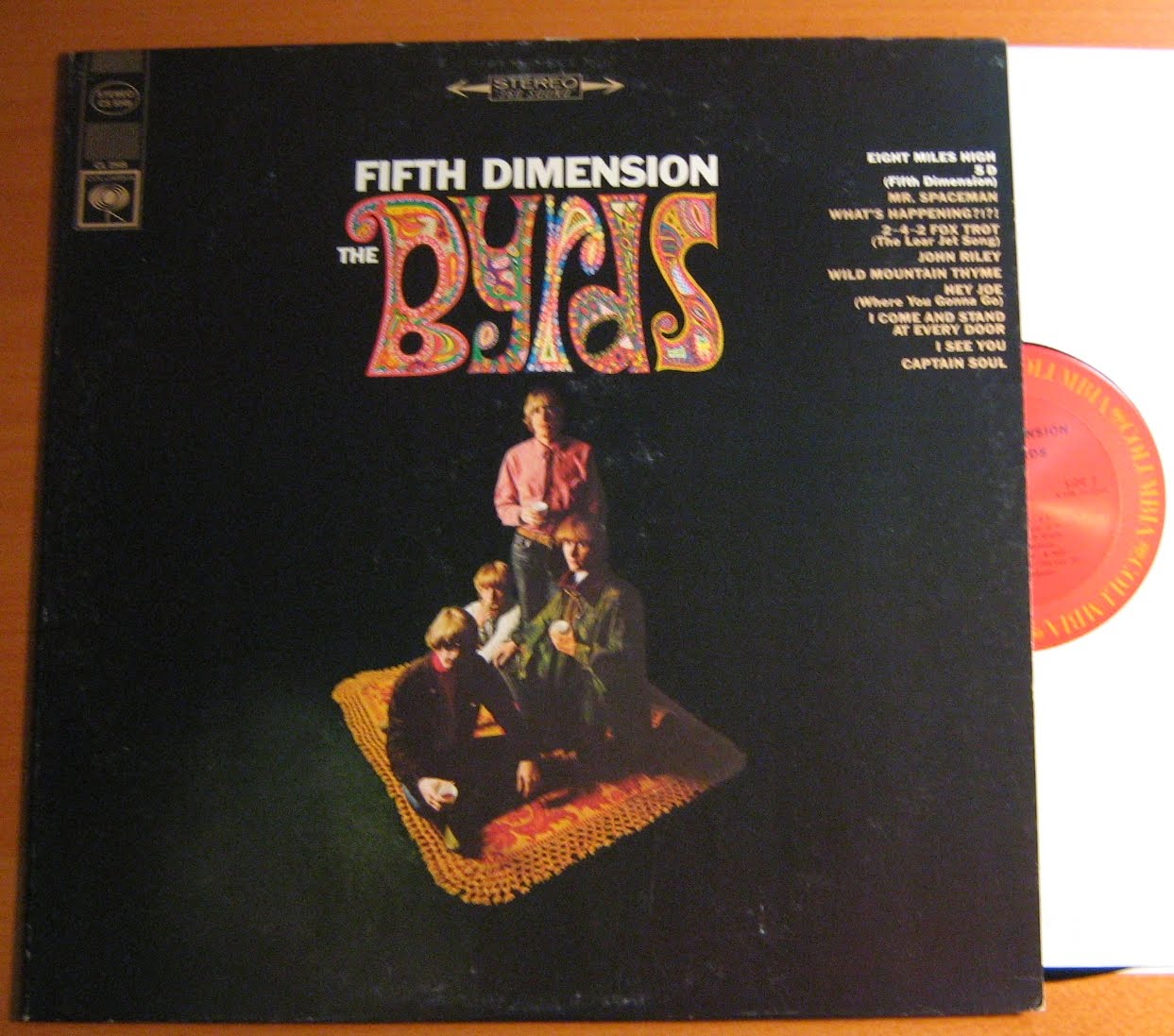
Byrds - Fifth Dimension

Lanciati nella troposfera con chitarre in versione sitar, pulsioni lisergiche e tappeti volanti in copertina, i Byrds gettano finalmente la maschera e replicano da par loro alla British Invasion allora dominante. Crosby (voce onirica), McGuinn (Rickenbacker rulez!), ma anche Hillman (bolle di suono quasi funky) si spartiscono un album che è ammiccante e falsamente innocente; citano gli sheets of sounds di Coltrane, si stupiscono dei viaggi aerei (…andatela a raccontare a qualcun’ altro…) e sanno ancora emozionare parafrasando i Vati del folk. Ottima produzione (…ottimi turnisti direbbero i maligni…), suoni sognanti che faranno scuola. “I Come and Stand at Every Door” sarà pur musicalmente carica di retorica, ma un nodo alla gola lo mette sempre…


ShareThis

Related Posts Plugin for WordPress, Blogger...